Daily journaling about thoughts, questions, and small daily insights can boost clarity, reduce stress, and help capture memories over time. This article highlights five popular five-year or daily journals that suit different styles—from simple prompts to reflective questions. Each selection offers a structured way to record a single thought per day, turning ordinary days into a valued personal archive. Read on to compare formats, prompts, and design features that best fit your routine and goals.
| Product | Brand | Format | Key Benefit |
|---|---|---|---|
| Canvas One Line a Day: A Five-Year Memory Book | Chronicle Books | Canvas Cover, Five-Year | Concise daily entry with visual appeal |
| One Line A Day: A Five-Year Memory Book | Chronicle Books | Compact, Five-Year | Simple, elegant daily line |
| The Daily Journal For Men: 365 Questions To Deepen Self-Awareness | C.W. V. Straaten | Prompt-driven, 365 questions | Structured self-discovery |
| One Question a Day: A Five-Year Journal | Aimee Chase | Five-Year, Question prompts | Curated prompts for consistency |
| Modern One Line a Day: A Five-Year Memory Book | n/a Moglea | Five-Year, Minimalist | Artful, concise daily entries |
Choosing the right thought-a-day journal can come down to how you prefer to think about the day, how much time you want to invest, and whether you value prompts, prompts plus space, or a simple single line. The highlighted options here balance compact daily entries with memory-building potential across five years, while also offering alternative prompts for introspection and personal growth.
Canvas One Line a Day: Five-Year Memory Book
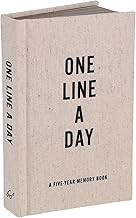
The Canvas One Line a Day book provides a durable, natural canvas cover with space for one line per day across five years. Each page is designed to capture a single thought or memory, making it easy to review how perspectives shift over time. The five-year format encourages consistency and long-term reflection, while the clean layout supports quick daily entries. This option suits readers who prefer a tactile, traditional journal experience with a focus on brevity and memory buildup.
One Line A Day: A Five-Year Memory Book

This five-year memory book emphasizes a single daily line, enabling quick entries that accumulate into a meaningful time capsule. Its compact design makes it portable for daily use, whether at work, school, or home. Readers who value a minimalist approach will appreciate the simplicity of this format, which reduces friction and supports steady journaling without demanding extensive writing time.
The Daily Journal For Men: 365 Questions To Deepen Self-Awareness
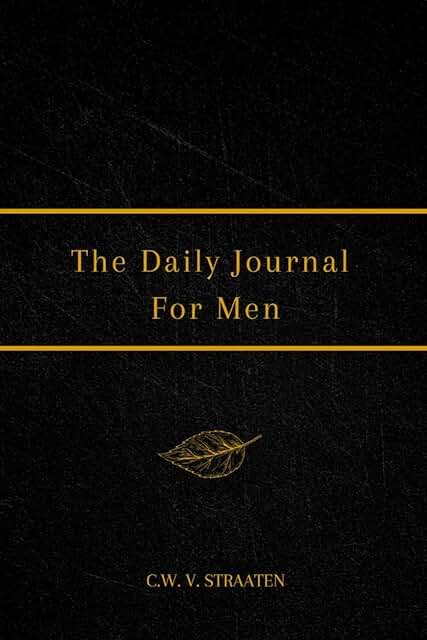
This journal uses daily prompts to foster self-awareness, offering 365 questions designed to provoke reflection and honest responses. It is well-suited for readers who want a more guided journaling experience and a structure that keeps daily entries focused. The prompts can serve as a starting point for deeper introspection or be simply answered in a few sentences, making it adaptable to varying schedules and energy levels.
One Question a Day: A Five-Year Journal

One Question a Day centers on a single question each day, extending across five years. This format balances depth and brevity, allowing readers to track evolving thoughts, lessons learned, and evolving attitudes. It works well for users who appreciate a simple, consistent prompt system that yields a rich, longitudinal narrative over time.
Modern One Line a Day: A Five-Year Memory Book

The Modern One Line a Day offers a contemporary, minimalist approach to daily memory keeping. It emphasizes a clean aesthetic and succinct daily entries, making it ideal for readers who prefer a less crowded page and a modern look. Over five years, these short notes can reveal patterns, moods, and moments that might otherwise be forgotten.
Buying Guide: Key Purchase Considerations
When selecting a thought-a-day journal, consider format, prompts, and longevity. Five-year layouts help observe changes in perspective, while single-line or prompt-driven formats support quick daily practice. Material quality, such as cover durability and paper thickness, affects long-term usability. Design preferences also matter: a minimalist page fosters speed, whereas a more guided journal with questions can deepen insights. Accessibility and portability influence whether you’ll carry the journal to work, school, or travel. Finally, consider whether you want a journal that doubles as a visual keepsake or stays strictly text-based.
Other considerations include fold-out or weekly summaries, the presence of guided prompts versus free space, and whether the brand emphasizes heirloom quality or functional daily use. For long-term reflection, five-year formats are particularly effective, as they visually reveal evolving memories and viewpoints. If you value aesthetics, a journal with a refined cover and legible typography can encourage consistency. For readers prioritizing speed, a single-line or question-a-day approach minimizes entry time while still delivering meaningful insights over years.
In summary, the right thought-a-day journal aligns with your daily routine, prompts preference, and the type of memory you wish to preserve. The five options above offer a spectrum from ultra-simple to prompted discovery, with durability and design considerations to match varied American lifestyles.