Finding the right science workbook for seventh graders can boost comprehension of natural, earth, and life sciences while supporting core skills. The selections below cover a range of hands-on activities, practice problems, and explanations to help students build scientist habits of observation, analysis, and inquiry. Each option is well-suited for classroom use or homeschool curricula, with features that align to common standards and engaging formats for wide American audiences.
The following table summarizes the chosen products, highlighting each title and its primary focus to help you compare at a glance.
| Product | Focus | Link |
|---|---|---|
| Spectrum Grade 7 Science Workbook | Natural, Earth, and Life Sciences with research activities | Amazon |
| 7th Grade Science: Daily Practice Workbook (ArgoPrep) | Daily science practice across physical, life, earth, and space science | Amazon |
| Awesome Outdoor Science Experiments for Kids | 50+ STEAM projects and explanations for hands-on learning | Amazon |
| The Vocabulary Workbook for 7th Grade | Weekly activities to boost vocabulary, supporting science reading | Amazon |
Note: All links open in a new tab for easy comparison as you review the options.
Spectrum Grade 7 Science Workbook

Spectrum’s Grade 7 Science Workbook assembles a broad mix of activities across natural, earth, and life sciences, with sections that promote scientific reasoning and independent research. The workbook’s format supports structured practice while offering room for classroom collaboration or homeschool exploration. It is designed to align with common seventh-grade science standards and includes hands-on activities intended to foster investigative thinking and data interpretation skills.
Key features
- Comprehensive coverage across core science domains
- Scientific research activities and hands-on tasks
- Suitable for classroom or homeschool use
7th Grade Science: Daily Practice Workbook

This daily practice workbook provides 7th graders with structured science practice over 20 weeks, spanning physical, life, earth, and space science, plus engineering concepts. The format emphasizes repetition, gradual skill-building, and quick feedback, which can help reinforce classroom learning or supplement homeschool curricula with regular, digestible activities.
Key features
- 20-week structured practice across science domains
- Inclusion of engineering concepts
- Concise daily activities for steady progress
Awesome Outdoor Science Experiments
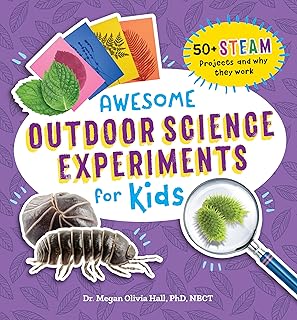
Awesome Outdoor Science Experiments offers more than 50 STEAM projects with explanations of why each experiment works. This resource emphasizes inquiry-based learning and practical, hands-on engagement, making it a strong companion to more traditional workbook formats. It supports exploring concepts through experimentation, observation, and critical thinking, which can enrich seventh-grade science foundations and foster curiosity outside the classroom.
Key features
- 50+ STEAM activities with explanations
- Hands-on, inquiry-driven learning
- Suitable for homeschool or classroom enrichment
The Vocabulary Workbook for 7th Grade

The Vocabulary Workbook for 7th Grade focuses on weekly activities to boost word power, supporting science reading and comprehension. While not a science workbook per se, strong scientific literacy depends on precise language and terminology. This book can help seventh graders understand science texts, protocols, and reports more effectively, complementing content-centered study with language development.
Key features
- Weekly vocabulary activities
- Supports reading comprehension for science topics
- Brand-new skill practice with explanations
Buying Guide: Key Purchase Considerations
When selecting a science workbook for grade 7, consider how the material aligns with your goals and the student’s learning style. The following perspectives help balance content, structure, and practicality.
- Content scope: Choose a workbook that covers core science domains your student needs, such as physical, life, and earth sciences, while including experiments or research activities to promote hands-on learning.
- Skill development: Look for sections that emphasize data interpretation, hypothesis testing, and scientific writing. Workbooks with explicit sections on how to design, conduct, and analyze experiments can help build scientific reasoning.
- Learning format: Some students prefer structured problem sets, while others benefit from labs and inquiry prompts. A mix of practice problems and activity-based tasks can accommodate diverse learning styles.
- Standards alignment: If your state follows specific standards (e.g., NGSS), ensure the workbook’s activities align to those benchmarks or offer cross-cutting skills like critical thinking and evidence-based conclusions.
- Instructor support: Consider whether teacher guides, answer keys, or video explanations accompany the workbook, especially for homeschool use where independent learning is important.
- Durability and accessibility: For classroom use, pages should withstand frequent handling. If the material is digital, confirm compatibility with your devices and offline access options.
- Supplementary materials: A workbook that includes or pairs with companion resources (like experiments kits or video explanations) can enrich the learning experience and provide varied demonstrations of concepts.
In evaluating the five options above, you’ll find a range of approaches—from structured daily practice to project-based experiments and language-focused guides. For a well-rounded seventh-grade science program, consider pairing a core workbook with an experiment collection to reinforce concepts through hands-on inquiry and real-world data analysis.