For hobbyists and aspiring ship modellers, the right reference books can make a big difference from rough plans to precise, museum-quality models. This article highlights five notable books and kits that cover planning, construction, detailing, and finishing touches for ship models. The selections emphasize a mix of traditional ship modeling guides and engaging, hands-on puzzle kits that appeal to different skill levels. Use the buying guide to compare approaches, materials, and project scope to find the best fit for your workspace and goals.
| Product | Brand | Type |
|---|---|---|
| Historic Ship Models | Sterling | |
| Basics of Ship Modeling: The Illustrated Guide | Kalmbach Publishing Company | |
| CubicFun 3D Ship Puzzles: USS Constitution | CubicFun | |
| Rolife 3D Wooden Ship Model Kit | Rolife | |
| Queen Anne’s Revenge 3D Puzzle | CubicFun |
Historic Ship Models: A Detailed Reference Guide

The Historic Ship Models book by Sterling is a comprehensive visual and practical resource. It features over 2,500 drawings, diagrams, and photos that guide readers through every construction technique. The volume includes charts, tables, and checklists, plus a 15-page nautical terms glossary in five languages. It also offers a curated list of ship model museums in the United States and Europe for inspiration and research. Practical sections cover getting started, hull accuracy, fittings, exposed machinery, masts, rigging, ropes, sails, and rigging details. This book emphasizes working instructions, cost control, and project selection to maximize results with limited tools and materials.
Key strengths include extensive visual references, sequential construction guidance, and a broad scope that can serve both beginners and seasoned hobbyists. It’s a reliable anchor for modelers seeking precision, historical accuracy, and a systematic approach to complex builds.
Basics of Ship Modeling: The Illustrated Guide

Basics of Ship Modeling: The Illustrated Guide from Kalmbach Publishing Company provides a structured introduction to the craft. While listed as a used book, it remains a valuable reference for foundational concepts, planning, and execution strategies. The guide covers core modeling topics such as hull construction, framing, and detailing, helping readers translate plans into faithful replicas. It’s well-suited for beginners transitioning to intermediate builders who want a clear, step-by-step learning path and practical tips for organizing tools, materials, and workspace. The book’s illustrations complement its practical instructions, making it easier to visualize techniques before committing time and resources to a project.
Building and Detailing Model Aircraft (FineScale Modeler Books)

Note: This entry centers on a closely related modeling discipline—scale aircraft—yet it remains relevant for ship modellers interested in fine detailing and finishing techniques that are transferable across models. The book provides insights into surface detailing, weathering, and precision assembly, with a focus on achieving realistic textures and convincing workmanship. For ship builders, the emphasis on meticulous detailing, part fitting, and paint applications can translate into more authentic hull sheens, deck fittings, and rigging accuracy, even if the subject is airframes rather than vessels.
CubicFun 3D Ship Puzzles: USS Constitution

CubicFun’s 193-piece USS Constitution 3D ship puzzle offers a hands-on, no-glue assembly experience designed for adults and teens. The kit provides a challenging, engaging build that results in a display-ready model. It’s a good way to practice spatial reasoning, piece-fitting accuracy, and steady assembly technique. While primarily a puzzle, the product’s outcome can serve as a decorative piece that complements more technical ship-building projects, offering a tangible bridge between puzzle-solving and model construction.
Rolife 3D Wooden Ship Model Kit
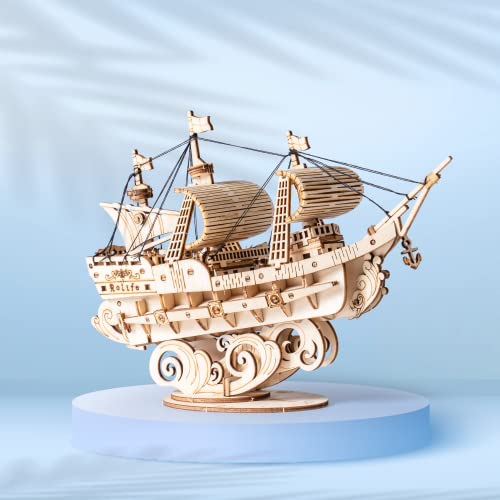
Rolife’s 3D Wooden Ship Model Kit is a compact, self-contained project featuring 118 wooden pieces and an assembly time of about three hours. The kit is designed to be glue-free and tool-free—read the straightforward instructions and you’ll assemble a small but elegant wooden sailing ship. It’s ideal for hobbyists seeking a quick, satisfying build, a decorative piece for desks and shelves, or a thoughtful gift. The kit emphasizes clean construction, precise fitting, and a hands-on crafting experience that can inspire more complex modeling efforts over time.
Queen Anne’s Revenge Puzzle Model Kit

CubicFun’s Queen Anne’s Revenge 3D puzzle kit offers a 1:95 scale representation of Blackbeard’s famous ship. The model measures a substantial display size, with 340 puzzle pieces and a realistic silhouette designed for a striking home exhibit. Notably, the product highlights 15 warm LED bulbs to recreate the ship’s evening glow, enhancing visual impact without needing glue. The puzzle challenge is described as highly complex, presenting a serious test of spatial reasoning and patience. Completing the model yields a prominent, conversation-starting centerpiece for living rooms or study spaces.
Buying Guide: Key Purchase Considerations
- Project scope and skill level: Choose books and kits that align with your experience and the amount of time you want to invest. Comprehensive manuals suit long-term projects, while puzzles and beginner kits provide quicker wins to build confidence.
- Materials and tools: Some guides emphasize a broad toolkit and varied materials, while puzzle kits are tool-free and glue-free. Consider your workspace, storage, and budget when selecting.
- Display goals: If you want highly accurate scale models for display, prioritize instruction-heavy guides that cover hull geometry, rigging, and finishes. Puzzles produce decorative pieces with impressive visuals but less historical fidelity.
- Historical accuracy vs. accessibility: The Historic Ship Models book focuses on accuracy and method, while puzzle kits emphasize approachable assembly and rapid results. Weigh the balance to fit your interests.
- References and inspiration: Look for books that include diagrams, glossaries, and museum references to deepen understanding and provide ideas beyond the build itself.
The selections above balance traditional ship modeling literature with accessible, hands-on kits. For a reader focused on historical methods, Historic Ship Models offers extensive guidance and visual references. If you’re starting out, Basics of Ship Modeling provides a clear path through foundational steps. For variety and hands-on engagement, CubicFun and Rolife kits demonstrate how puzzle-building and wooden model kits can complement more technical modeling ambitions. Together, they provide a well-rounded toolkit for American hobbyists pursuing model ship building with depth and breadth.